
“People kill people”
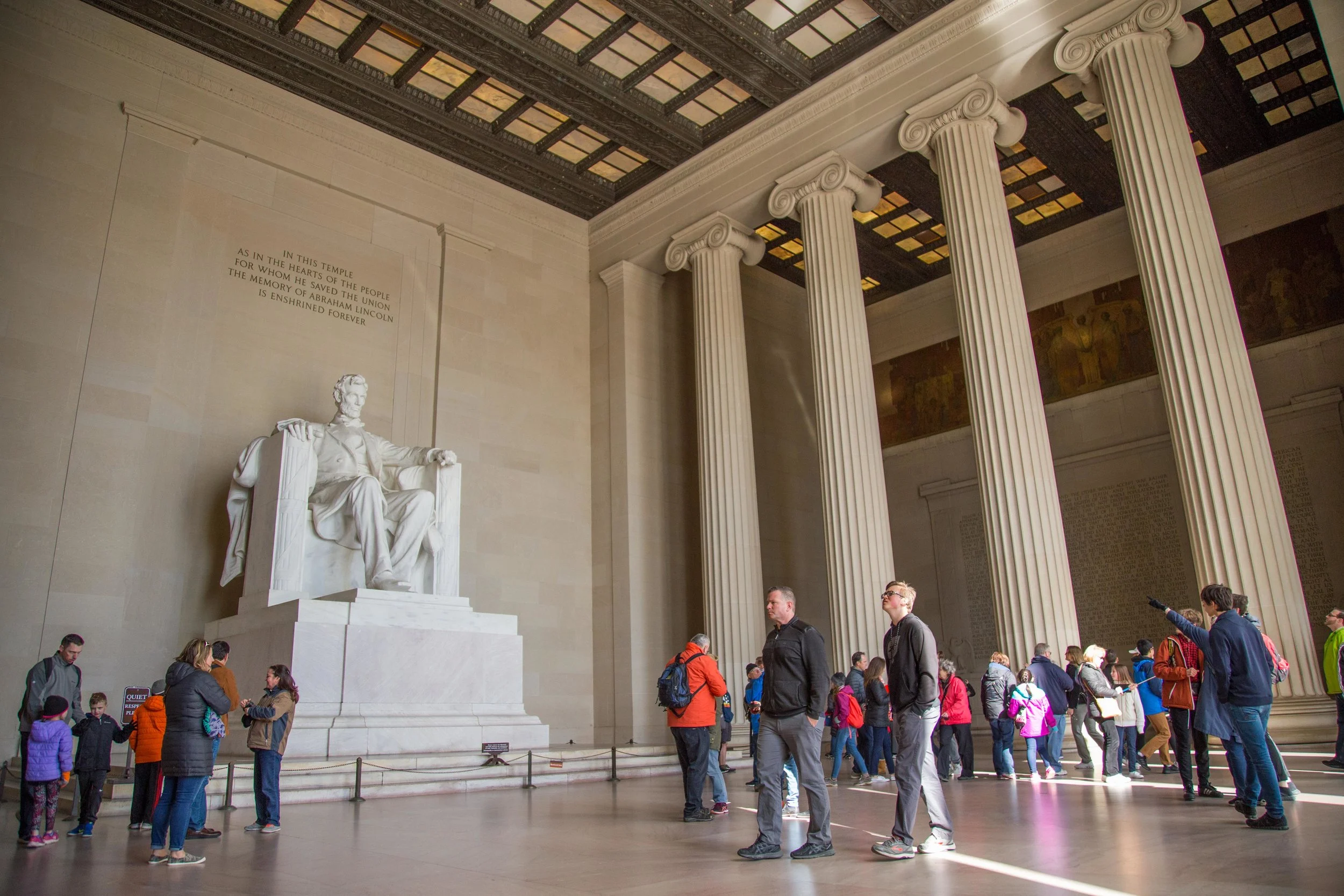
One of hundreds of school kids raises his voice to a classmate while walking through the National Mall, at the foot of the Abraham Lincoln memorial. I immediately know that I just missed the first half of what he was saying. But we all know what it was.
In the nation's capital thousands of young students have descended upon and are on walking tours of the city. We are in Washington, D.C. the "most powerful city in the world" and home to what could possibly be more stone columns than Greece.
The Star Spangled Banner is everywhere, atop hotels, government buildings, on bumper bars and all over these students. They wear USA jackets, beanies, scarfs and red “Make America Great Again” baseball caps. The ones made popular by Trump in his presidential campaign.
What surprises me is just how patriotic these kids are and at the same time, how slightly naive. Sure, they are just kids, I get that and I know I would have been accused of much worse as a pre-adolescent and even now. But hearing these kids talk, it’s clear that some of them, fortunately a minority, peddle the same rhetoric as their country’s leader.
“People kill people” (guns don't)
What else kills people?
Cars. Workplace accidents. Natural disasters. Disease.
But something is done to try and mitigate inherent risk.
When it comes to guns, not so much so.
Now there is a group of schoolkids trying to change that.
The people we meet over the next few days in Washington are mostly motivated, vocal and brave teenagers who want to make a difference. They are the students who watched classmates die, the kids who cowered in classrooms not knowing if they would live to see their families again and the children who have been affected by gun violence on their streets and in their neighbourhoods.
Keshon Newman has travelled from Chicago, a city he says is plagued by gun violence. He tells media assembled outside of Congress “this is why I’m here: because we must stop letting this become the norm”. Just two years ago Keshon’s eldest step-brother was killed by gunfire as he walked his girlfriend to a bus stop.
“We don’t have random mass shootings, we have daily shootings”
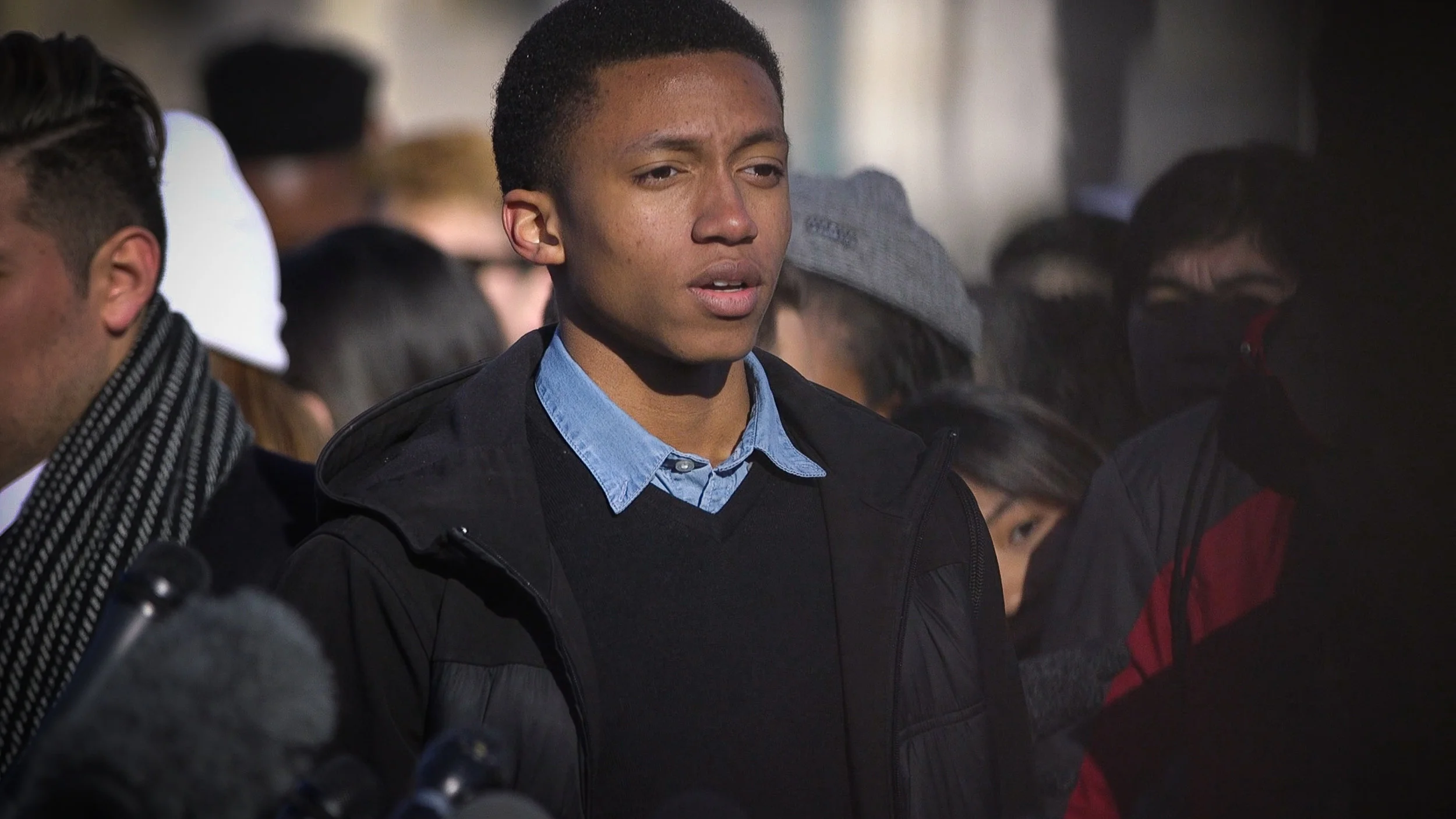
He, a number of other teens and a handful of sympathetic politicians are at a press conference the day before hundreds of thousands of students hit the streets of Washington, D.C. to protest gun violence. The victims of which number in the thousands each year but sadly affects tens of thousands more.
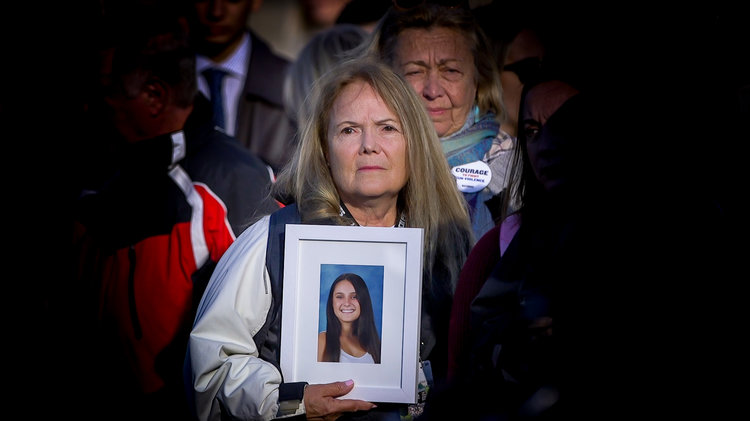
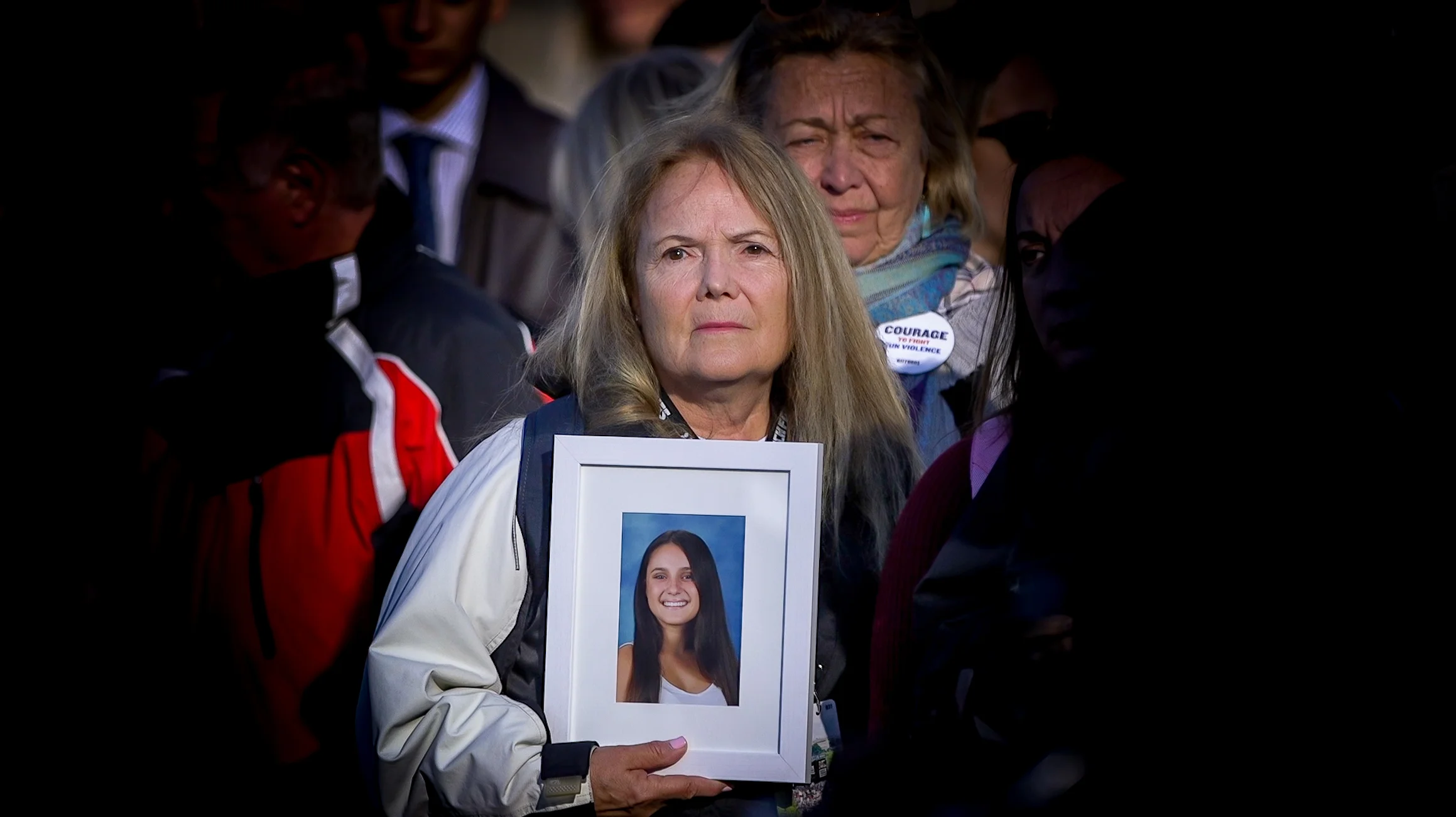
Standing fifteen metres away from me is one of the family members affected by a school massacre. She’s the grandmother of Alyssa Algadeff, a 14 year old student who was killed in the Parkland school shooting. Older with piercing dark brown eyes and blond hair she holds a white framed photograph of her slain granddaughter and stares in my direction, minutes pass but she does not look away. Through my viewfinder I can’t stop looking back and the longer I do, the more my heart breaks. I just can’t imagine what it must be like for any grandparent or parent to have to outlive a teenager. But here, in the United States, many have and many more will.
“No student should ever be afraid to walk down the hallways of their school or to walk down the streets of their neighbourhoods”
US Representative Ted Deutch tells the March for our Lives press conference.
The next day, we talk to dozens of school kids as we walk what is building up to and has now become the overcrowded streets of Washington. Squashed up against one another, holding every colour of placard, are hundreds of thousands of people, all colours, all ages, all concerned by one thing.
“I hate the fact I have to worry about my children’s safety at school”
A mother of two boys tells us. It’s not just students and parents though, it’s teachers too. They have come out in force and through their signs make it known they absolutely disagree with President Trump’s school security recommendations.
“I am a teacher and I will not carry a gun!”
Reads one sign, it’s creator a teacher for 21 years has only started doing “active shooter” drills with her 5 and 6 year old students in the past two years. She knows they are necessary but still finds them "really scary".
She and two primary school aged girls run us through what a drill entails; closing windows, blinds, locking doors, hiding under desks and being absolutely silent. They do this multiple times a year to be prepared for the day a shooter might enter the school. If the students from Stoneman Douglas High School who survived February's massacre and have since organised this protest get their way, these kids might never have to endure what they did.
MORE IN THE VIDEO BELOW