
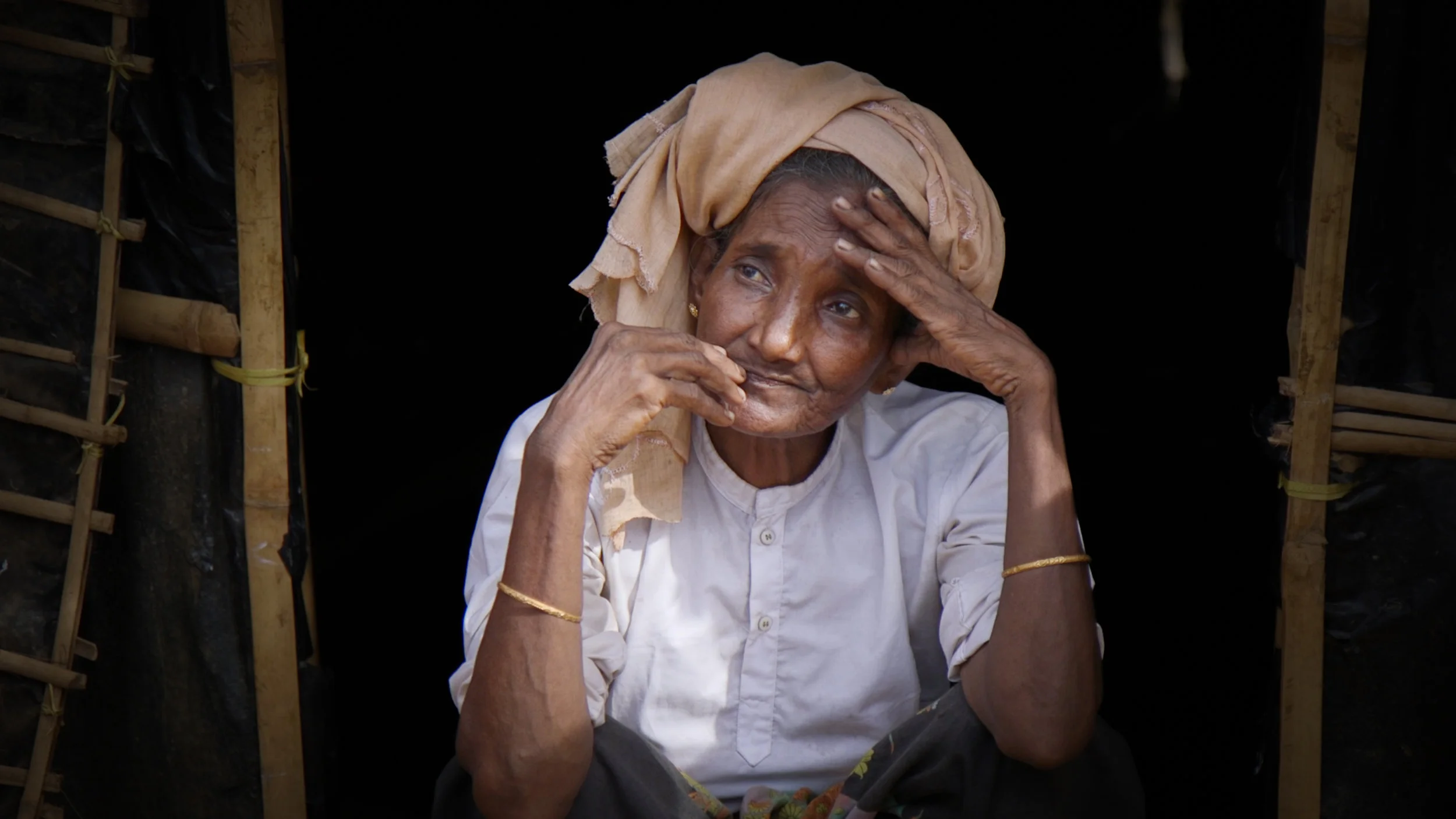
There is hell on earth… in fact there's probably a few.
Today one of those was a refugee camp in Southern Bangladesh.
What might be hell to me though is a haven to others. To a people that deserve better than the squalid, hot and humid conditions they now find themselves in, through no fault of their own.
We arrive into the Jamtoli refugee camp as midday bares its brunt upon the light brown soil and makeshift shelters. Shelters made of bamboo and plastic, shelters that sweltered like saunas in the strong sun.
Nonetheless it is shelter. And after weeks of hiking through the Burmese jungle to end up here, it’s a welcome retreat.
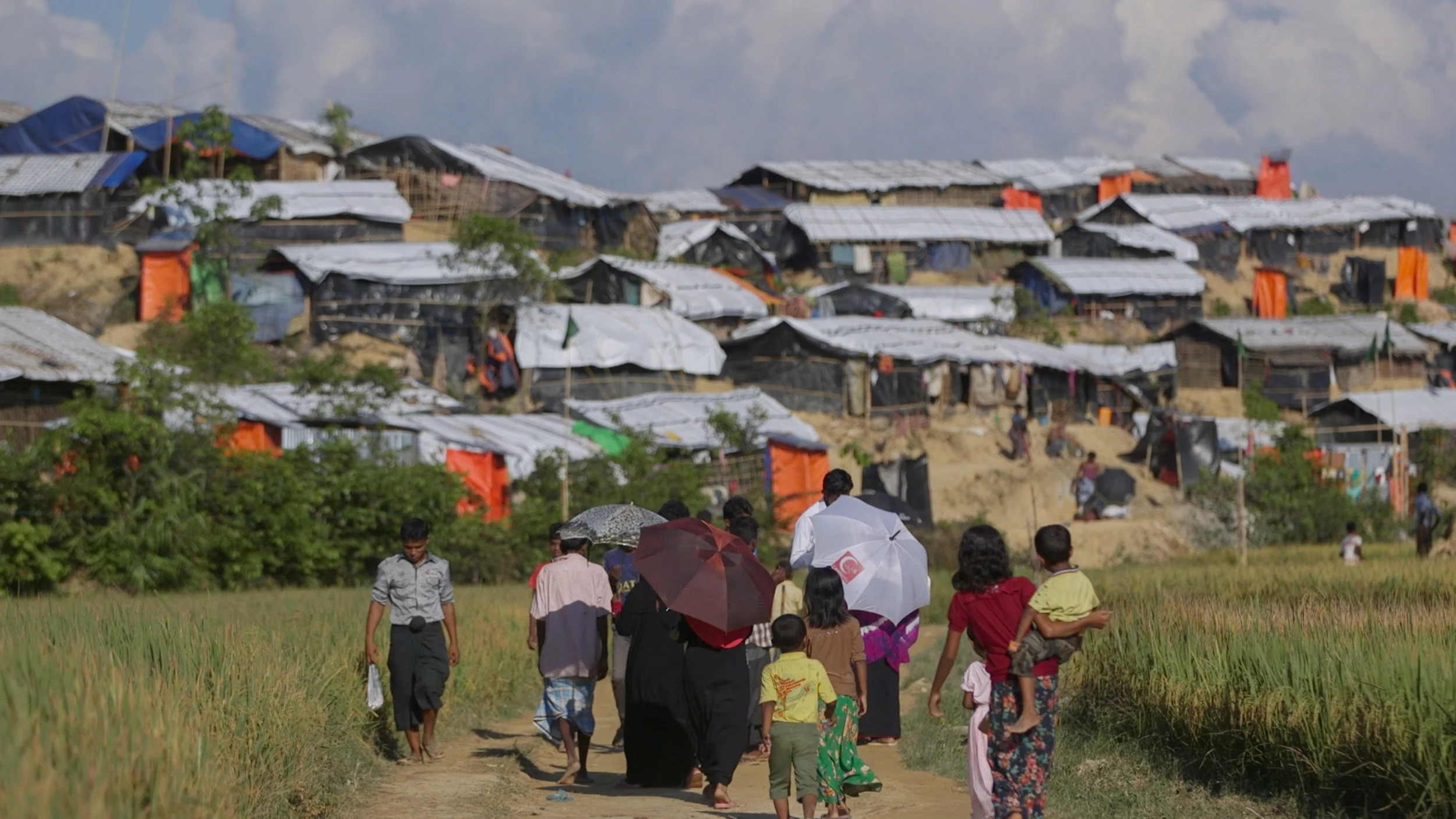
Stepping out the air conditioned comfort of our van, sweat beads begin to surface. Everywhere.
We walk along a dirt track, dwarfed by hillsides covered in hastily constructed huts, hundreds upon thousands of them. Children walk by, many naked, boys & girls, babies and toddlers. Some with older siblings or parents, some on their own. Others are showering, if you could call it that, to cool down, raising water from underground wells, pulling and pushing hand pumps that stand taller than themselves.
Flags flap overhead, the letter F emblazoned. We ask Dr Unni Krishnan our new friend from Save the Children what these mean. “They indicate the area of the camp, they started at A went through to Z then started again at AA” exactly what it’s up to now he can’t recall. The influx of Rohingya people into Bangladesh has totalled in excess of 600,000 since the end of August, thousands more arriving each day.
It is unprecedented and for the various organisations on the ground here, it’s unrelenting.
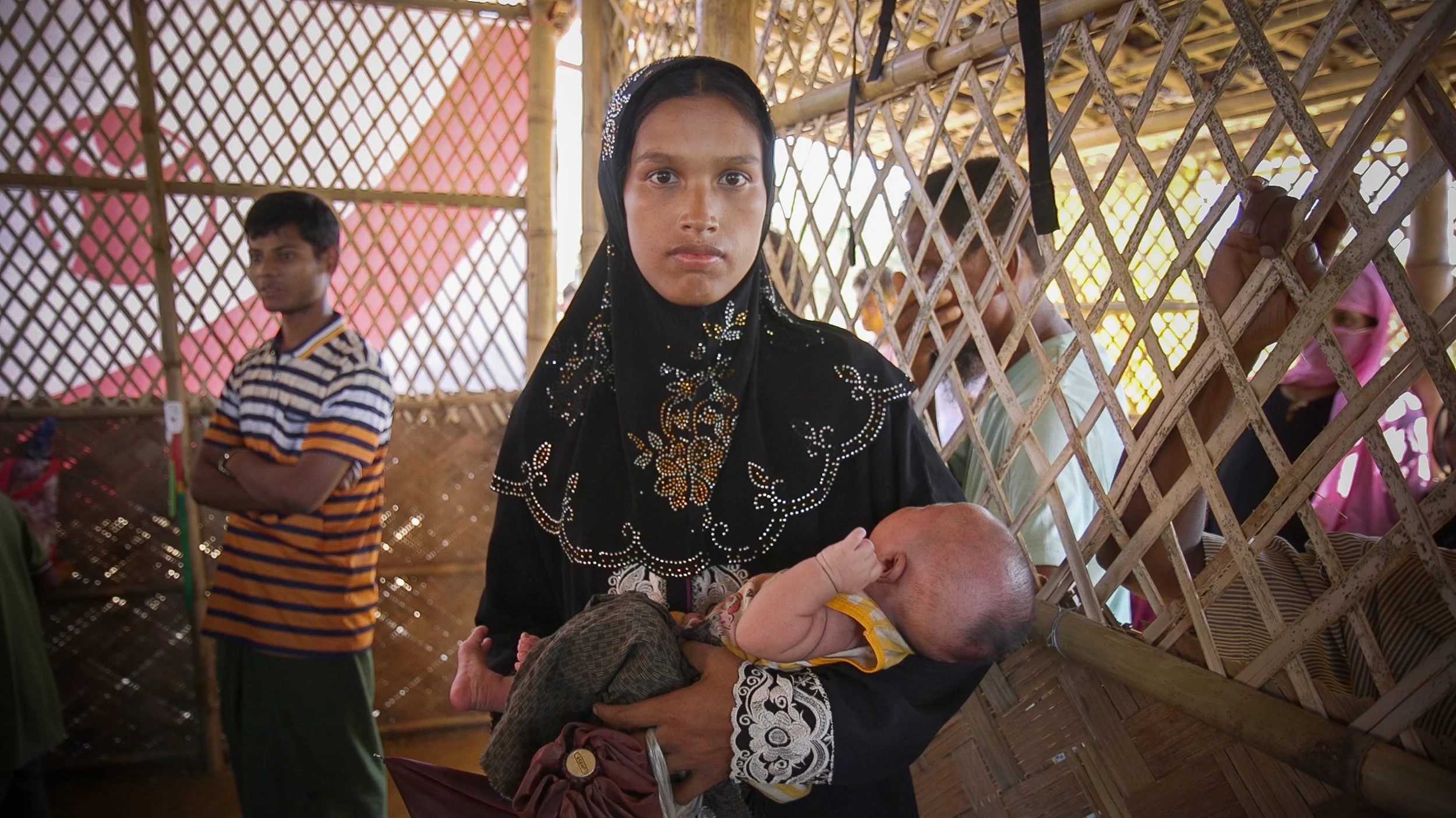
We visit a medical centre, the sound of babies crying arrive before we do. People are lined up, women, men, kids and newborns. It’s at least 30 degrees. While the wait might be long, if lucky, they might see a medic at the end of it. A woman inside cradles her crying baby, trying to rock him to comfort. It’s of little use. His screams don’t dissipate and neither does the layer of sweat hovering upon her upper lip. She looks young, maybe in her 20’s or early 30’s, the only thing showing is her face. She is beautiful and her large brown eyes gaze into my lens with a look of despair but the rest of her face is void of any real emotion. She is tired. If not from the journey to or the harshness of living here, it’s from the worry of having a sick child. A child suspected of having measles.
Any infectious disease or illness such as cholera, measles, gastro or influenza, in such an overcrowded setting is a recipe for disaster. Refugee camps like this teeter on the brink, one small event away from yet another mass tragedy. When it comes it might be from monsoonal rains, a viral outbreak or any other number of catalysts. The former two are likely and likely preventable but not with the current resources. These people need more. More of everything. And they needed it months ago.
"Kids need to be kids"
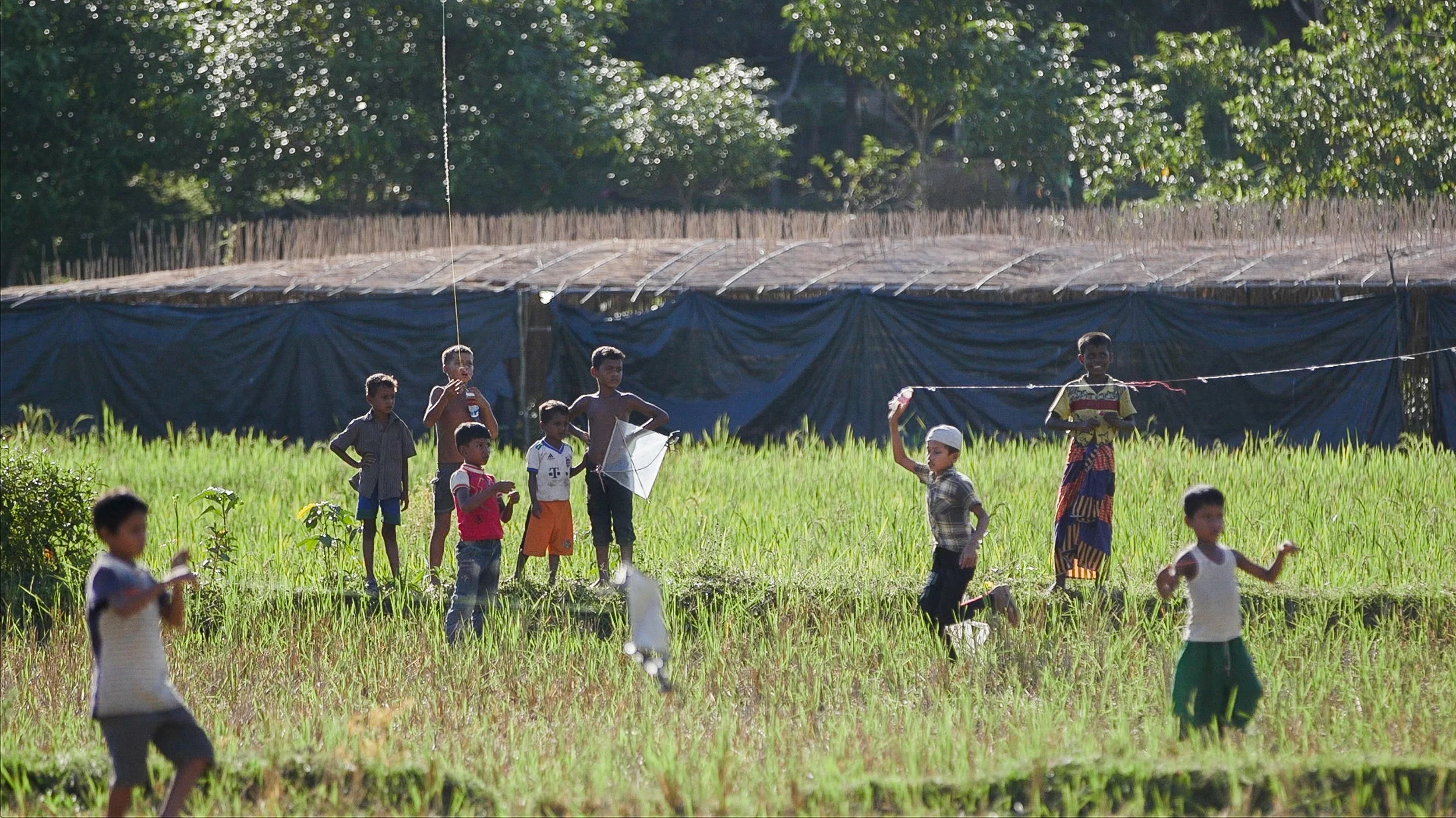
I hear Unni say to our producer Nick Olle, nowhere is that more evident than here, right here, right now and right outside this medical centre. What these kids are doing is something so basic yet contextually remarkable that it will stay with me forever, a contrast to the horrifying scenes and stories that we have yet to see and hear.
Stories like that of Mohammed, he is 31, just a year younger than myself. What he has experienced though I never will. Arriving into Bangladesh a few days ago alongside his wife and 4 children, he tells of the Burmese forcibly arming local Rohingya with the tools to demolish houses. Their own houses. Refusal would see him and his neighbours come face to face with the barrel of a loaded gun. Finger on trigger. Inevitable death.
In a village nearby, earth was recently disturbed and inside a pit lies a terrifying scene. The stuff of nightmares. Finding it, seeing it for himself, Mohammed knew that this was no longer the Rakhine State he had grown up in, no doubt it was never easy for the Rohingya, but nor was it ever this hard.
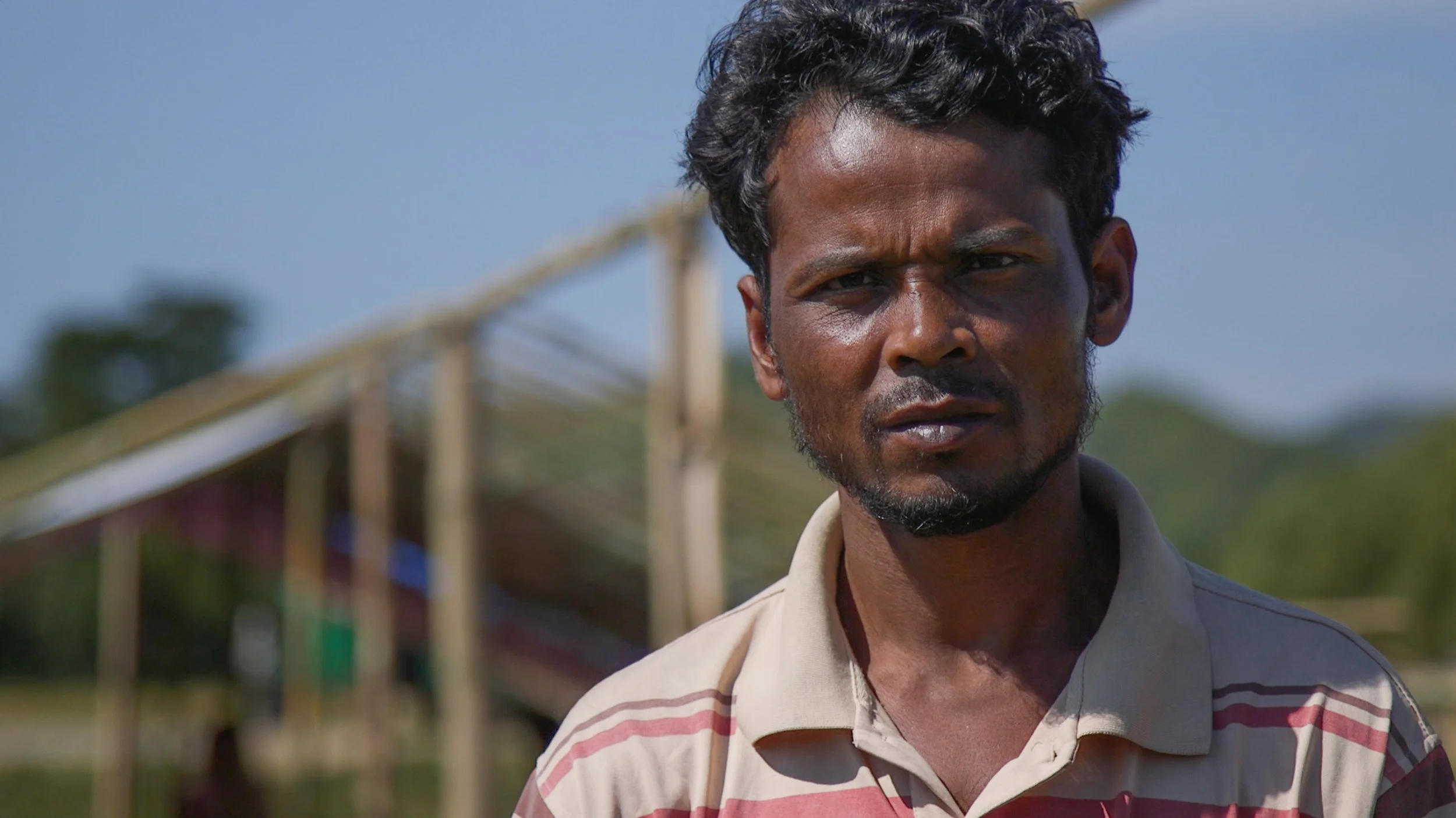
He stands before a four by four metre block of land, yards away from the main road in Nayapara, “this is the house we live in”. You couldn’t realistically call it that though, at this point it is mostly a small bit of farmland framed upon a backdrop of the very Burmese mountains they hiked through to escape here. Such is the necessity of shelter though that in just a few days a mishmash of bamboo and plastic tarps will be the only thing protecting his family from the elements. But really more than anything right now, they need food.
“We are afraid of starvation. We have nothing to eat here yet... we are also scared, all the night"
I fear that even with sustenance, shelter and what I may naively and optimistically speculate, a brighter future, those nights are still going to be troublesome for Mohammed. I struggle to believe anyone, anywhere, can come across the corpses of twenty decomposing others, skulls partly exposed, unceremoniously dumped into an open void and not be kept up with nightmares.
In the more established Kutupalong refugee camp, we meet 15-year-old Yasmin… Fifteen. Years. Young. She has had to grow faster than anyone I have ever known. Playing with friends in a field outside her family home one moment, minutes later an orphan and homeless.
“We just ran away when they suddenly fired the rocket launcher, later on when we returned we found them dead and burnt”
What happened after that is enough to bring tears. It was enough to bring tears.
Yasmin is the first rape victim I have ever met. The only person I know to have her family home and family annihilated to then be captured and horrendously defiled by the very monsters who did this. Coming into this assignment I expected to hear horror stories. But up until now those were only ever stories, fiction. This was worse, so much worse, this was real life, this happened and is happening and we are now hearing all about it.
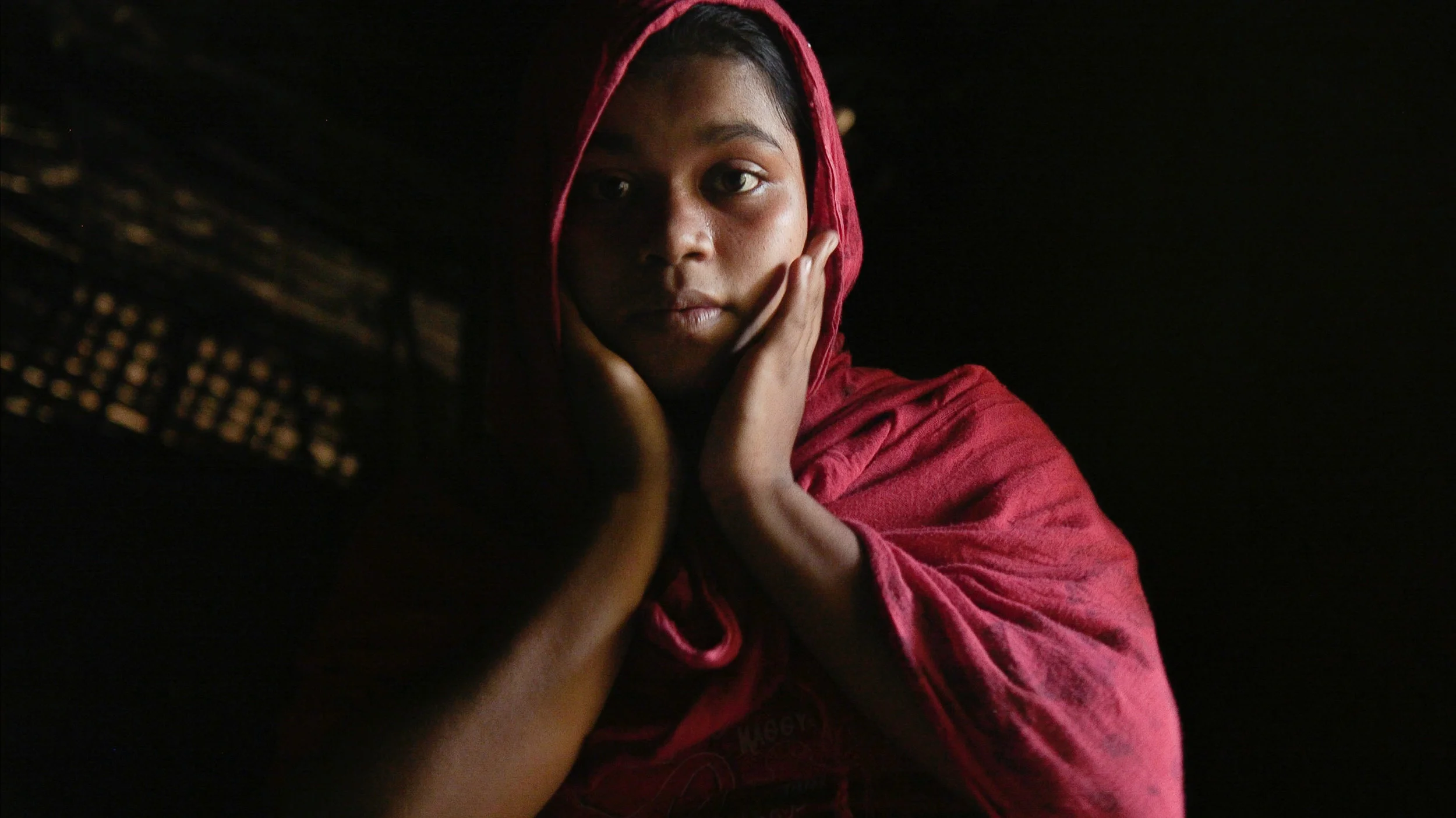
Part of me wishes I had never heard Yasmin’s journey into premature adulthood. The other half is glad I have, because at least she is sitting in front of me, alive, to tell it. It could have ended very differently for this very brave woman, surprisingly it came down to the only item of any real value she had left. An item so small, so easily missed. But in desperate times it’s astonishing what might buy you “freedom”, if you could call it that. For Yasmin that was a spot on a raft to Bangladesh.
“They said you have nothing to pay for your fare. I told them I do have a nose stud; I will give it to you”
Every person we spoke to and every story we heard told of unimaginable loss. Loss that those of us in a country as lucky as Australia will never experience. Loss that I wish these incredibly resilient fellow human beings had never endured. After four days witnessing refugee camp life my heart breaks for the marginalised and persecuted Rohingya people, forever stateless, unrecognised by the country in which they lived and now homeless and hungry. Life here is tough, but life is living and they are doing just that.
Red buckets snake their way through the crowd upon the shoulders of kids and adults. I see a group in good spirits huddled around one as they inspect its contents. In these camps there are both emergency food distributions and there are NFI distributions, non-food items. Food item rations include two litres of cooking oil along with enough lentils and rice to last two weeks. This bucket carried non-food items and in it alongside soap and other household items was something that had this group of young men very excited.
In a world that plunges into darkness after sundown, they now had light. A little brass coloured lantern that will shine brightness into their shelters, into what is now, for the foreseeable future, home.
As we left the camps for the final time I find myself wracked with guilt. The same guilt that had me holding back tears in front of Nick as we ate dinner in our nice hotel after an eye-opening and soul-destroying first day of filming here. These beautiful people don’t deserve this. No one deserves this. And I don’t deserve to have any better a life than they do.
But there is hope.
There is hope that Yasmin finds her lost brother, the only of her five siblings that she suspects may be alive. There is hope that she will be able to receive an education as her late father had so wanted for her, “my father told all my relatives to put all his girls in school even if he died”. For Mohammed and his family there is what seems like improbable hope “if they do not torture us further and give us back our rights we will go back…if they recognise us as Rohingya”.
With the Myanmar government downplaying this whole crisis, an incident the UN likens to “ethnic cleansing”, I wish I had more hope for Mohammed and others like him that want to return to a “home” they are seemingly not welcome in.
Back at Jamtoli and outside the medical centre the winds pick up. From a vacant field and atop neighbouring hills there are the sounds and sights of joy, dozens of kids flying kites high into the sky. It is beautiful. The most beautiful thing we have seen this assignment. Too exhausted and hungry to even cry just weeks ago, these children are now building toy cars from bottles, kites from sticks and plastic bags and sleds from flattened plastic containers and rope. It is the ultimate recycling craft programme, Play School in a setting that no parent ever wishes for their young. But in this refugee camp and the others we have visited over the past four days, they are making the most of what could otherwise be a forgotten childhood. These kids are the future of the Rohingya refugee crisis, but for now they are just kids and like old mate Unni says; “Kids need to be kids”.
I just hope us adults of the world can be adults and do something to help.
The Project visited Southern Bangladesh to gain a first-hand account of how the Rohingya refugee crisis is unfolding and what is being done to help displaced civilians. The full video package below, watch in HD.